The Cropping Mistake That Changes the Story
Cropping changes an image’s claim. Use this simple frame-checking routine to spot missing context before you decide what a photograph shows.
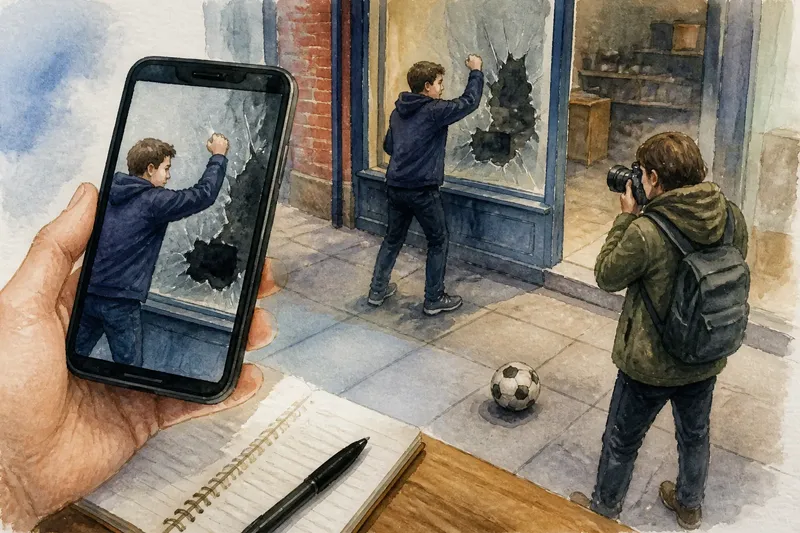
You see a photograph on a phone: a person stands beside a broken window, one arm raised. The tight crop makes the gesture look like a strike. Then the frame widens. A football lies on the pavement, and a second person is holding a camera. The extra details do not settle every question, but they change what the first view seemed to say. Cropping changes an image’s claim, so make checking the frame a regular habit before interpreting a photograph.
A week of frame checks
A useful routine does not require specialist software or a forensic mindset. It asks you to pause at several points during an ordinary week and notice what each frame includes, excludes and encourages you to assume. Keep a note on your phone or a small page in a notebook. Record the image, the first impression and the detail that might qualify it.
Monday: notice the first claim. When an image catches your attention in a news feed, group chat or print publication, write down what you think is happening. Keep the wording plain: “The person is pointing at the driver,” not “The crowd is confronting the police” unless those details are visible. Separate what the image shows from the story your mind supplies.
Tuesday: inspect the edges. Look around the four sides of the visible picture. Ask what a hand, sign, vehicle or face is cut off by the boundary. A cropped arm may make a gesture appear directed at one person when it could point elsewhere. A partly visible sign may change the setting. The edge is not empty space; it is where useful context often disappears.
Wednesday: compare versions. If the image is available in a larger format, open it without assuming that the wider version is automatically complete or neutral. Compare what each version includes. A publisher may crop for a column, a thumbnail or a specific focus. Those practical reasons explain a choice, but they do not tell you whether the crop supports the caption’s strongest claim.
Thursday: read the surrounding material. Check the caption, date, location and nearby text. Look for a credit or link to an original source. These details can help you distinguish a photograph from a screenshot, an illustration or a frame from a video. They may also reveal whether a caption describes what is visible or adds information that cannot be checked from the frame alone.
Friday: describe before judging. Return to one image you saved. Write two short sentences: one listing visible details, the other naming your interpretation. If the second sentence contains words such as “because”, “after” or “in response to”, ask whether the picture itself shows that connection. Often, a photograph records a moment without showing what led to it or what followed.
At the weekend: review one assumption. Revisit your notes and identify an image whose meaning changed when you considered its boundary or context. Add one question you would now ask before sharing it. This small review makes the routine practical: the goal is not to doubt every picture, but to catch the point where a visual impression becomes a confident claim.
What the frame leaves out
A photograph has a visible boundary, but the scene around it continues beyond that boundary. The photographer, editor or platform chooses which portion appears. A crop can bring a face closer, remove an unrelated distraction or fit a standard layout. It can also remove a companion, a warning sign, a queue, a camera crew or the space between people. Any of those omissions may alter how a viewer reads the scene.
Think of the frame like a keyhole: it gives you a real view, but not the whole room. A narrow view is not automatically deceptive. The important question is whether the missing area would change the interpretation being offered. A close portrait can be a fair portrait. The same close portrait may be weak evidence for a claim about a crowd, a confrontation or the mood of an entire event.
Pay special attention to claims about relationships and causes. A crop may show two people close together without showing whether they are speaking, passing in a busy space or standing apart in a larger group. A still image may show a raised hand without revealing whether it is a wave, a signal or a response to something outside the frame. The picture can support a description of visible positions and gestures; it may not establish the reason for them.
Notice scale, too. A tight crop of several faces can suggest a dense gathering, while the wider scene may show that they are a small group in a large space. A cropped line of objects can appear to stretch further than it does. This does not mean you should count what you can see or guess at what is missing. It means that words such as “packed”, “empty” or “everyone” need more than a suggestive slice of an image.
Trace the image’s route
Images often pass through several hands before reaching you. Someone takes the photograph, another person selects it, an editor crops it, and a platform may create a thumbnail. A screenshot can crop the crop again. At each stage, the visible frame may change while the caption or claim travels with it. A familiar photograph can therefore acquire a new meaning in a new setting.
When a source is available, open it in context rather than relying on a detached repost. Check whether the page identifies the photographer or original publisher, and whether the caption provides a place and occasion. If the image appears in a video, look for the surrounding footage or a neighbouring frame, when available. A sequence may clarify movement that one still frame cannot show.
Keep the search proportionate. If a wider image is easy to locate, compare it. If you cannot verify the source, say so to yourself and keep your description narrow. Do not treat a missing original as proof of manipulation, and do not treat a familiar logo or polished caption as proof that the crop preserves the full context. Source details help you assess an image’s route; they do not replace careful looking.
A claim with its limits
Imagine you receive a cropped photograph showing a woman standing at the entrance to a shop, with a cardboard sign in her hand. The accompanying message says she is protesting the shop’s new policy. You can see the woman, the entrance and part of the sign, but its words are cut off. Before repeating the claim, enlarge the image if possible, look for a wider version and read the post around it. If the sign remains unreadable and the source gives no further context, describe what is visible rather than presenting the message’s explanation as fact.
This is not a reason to avoid interpretation. It is a way to match confidence to evidence. You can say, “The photograph shows a woman holding a partly cropped sign outside a shop.” You can also say, “The post describes it as a protest, but the image alone does not establish that.” The distinction is useful when sharing an image, discussing it in class or choosing it for a presentation.
Captions deserve the same care as crops. They may identify people or explain an event, but a caption is an additional claim, not a detail made visible by the photograph. Check whether the wording reports a sourced fact, offers an interpretation or quietly links two events. A crop and a caption can work together to imply a story more strongly than either would on its own.
Before you share
- Name the visible details. Describe people, objects, gestures and signs without assigning motives.
- Check every edge. Notice cut-off bodies, text, surroundings and objects that might affect the reading.
- Separate scene from sequence. Ask whether the picture shows what happened before or after the captured moment.
- Find the source context. Look for the original page, caption, date, location and image credit when available.
- Test the scale of the claim. Be wary when a tight frame is used to describe a whole crowd, place or event.
- Qualify what remains uncertain. Use wording that distinguishes what the image shows from what a post says it means.
These checks are most useful when a picture seems to provide instant proof. A striking crop can make a complicated event feel simple because it removes the details that would slow your judgement. Taking a moment to look beyond the first visible boundary helps you keep observation and inference apart. The aim is not to discover a single perfect frame; it is to notice what a particular frame lets you claim.
Questions about cropping?
Can a crop be misleading if every visible detail is genuine?
Yes. A crop can contain only authentic details and still omit information that would change how viewers understand the scene. The issue is not just whether the pixels are real, but whether the selection supports the claim attached to them.
How can I tell whether an image has been cropped?
Look for a wider version from the original publisher, photographer or source page, and compare its edges with the copy you saw. A crop may also be apparent when text, bodies or objects end abruptly at the frame, though that alone does not establish how or why the image was cropped.
Does a wider frame tell the whole story?
No. It may reveal useful surroundings, but it still shows only a selected moment from one viewpoint. Captions, sequence, location and other credible context can help, while some questions may remain unanswered.
What should I say when the context is unclear?
Describe what you can see and mark the rest as uncertain. For example, distinguish “the image shows a raised hand” from “the person is signalling to the driver” unless the available context supports the second statement.
Make the frame check part of your ordinary reading: pause before sharing, look to the edges, and ask which detail would change your first impression. The most responsible reading of a cropped image is often not a dramatic verdict, but a precise sentence that stops where the visible evidence stops.